Concrete Grinding Perth

Our Partners

kwikfloor
carbon
moort bunji
HUSQVARNA

Concrete Grinding for Safe, Level, Construction-Ready Surfaces

A single uneven slab has the power to stall your entire construction schedule… but it doesn’t have to.

In Perth’s construction sector, surface irregularities or out-of-spec tolerances can trigger coating failures, compromise waterproofing, and stop flooring installers in their tracks.

At Kwikcut, we eliminate these bottlenecks with high-precision concrete grinding that restores structural tolerances and strip away stubborn adhesives, ensuring your substrate is perfectly prepared for the next phase of the build.

With 50+ years of combined experience and over 10,000 projects completed across WA, we specialise in the rapid, surgical surface prep required for Tier 1 and Tier 2 sites.

The Kwikcut Advantage:

  • Engineering-Grade Leveling: Restore floor flatness and level tolerances to meet strict architectural specifications.
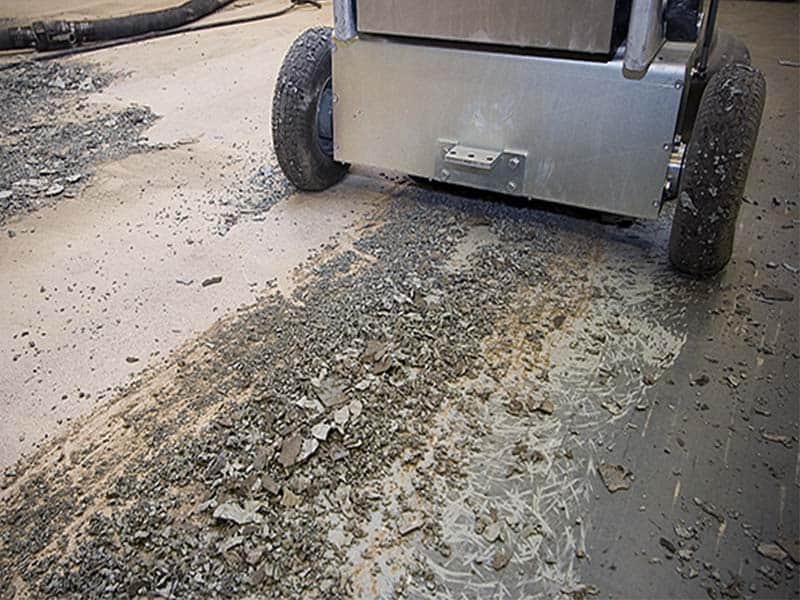
  • Rapid Coating Removal: High-torque diamond grinders from Husqvarna and Hilti efficiently strip epoxy, waterproof membranes, and hardened adhesives.
  • HEPA Dust Containment: Advanced vacuum systems ensure a clean, compliant workspace.
  • 24-Hour Response: Rapid, fixed-price quotes delivered within 24 hours to keep your project on schedule.

From massive industrial warehouses to detailed commercial fit-outs, we provide the disciplined preparation needed to move your project forward.

Reach out today to receive your 100% obligation-free quote.

Concrete Grinding

How Do I Know If I Need Concrete Grinding?

In Perth’s construction environment, mechanical surface leveling is the standard solution for converting a problematic slab into a compliant substrate.

If your project encounters any of the following obstacles, a precision grind is the most cost-effective path to maintaining your schedule:

Tolerance Failures: Your slab exceeds specified level tolerances, creating “high spots” or uneven expansion joints that interfere with structural fit-outs.

Bonding Obstructions: Residual epoxy, waterproof membranes, or hardened adhesives from previous finishes are preventing new coatings or floor coverings from adhering.

Trip Hazard Mitigation: Uneven slab transitions or raised joints in high-traffic commercial or industrial zones require immediate leveling for safety compliance.

Precision Machinery Bases: You are installing sensitive equipment or steel frames that demand a perfectly flat, vibration-free foundation.

Surface Degradation: The existing concrete shows signs of rain damage, curing inconsistencies, or “spalling” that requires a smooth, structural reset.

Aesthetic Refinement: You need to remove unsightly surface textures or preparation marks before applying a clear sealer or thin-set floor finish.

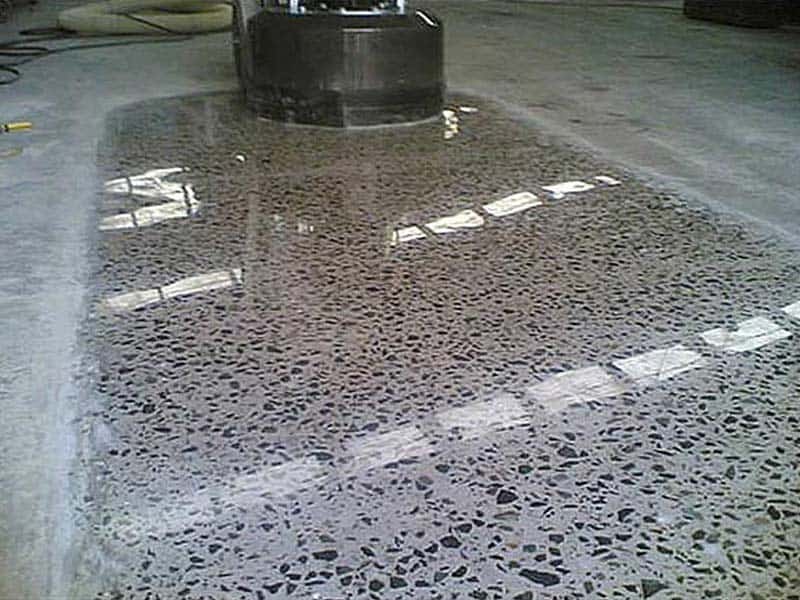
While manual methods often leave behind uneven textures, our planetary grinding technology achieves a uniform Concrete Surface Profile (CSP). This ensures that whether you are waterproofing a balcony or prepping an industrial warehouse, your materials will bond permanently to a stable, level surface.

How Much Does Concrete Grinding Cost?

Project Type / Surface Condition Typical Pricing Range (Perth) What Affects Pricing
Light surface smoothing or minor levelling $3 – $6 per m² Small surface imperfections, minimal coating removal
Standard slab preparation before flooring $5 – $10 per m² Removal of adhesives, paint, or surface contaminants
Heavy coating or epoxy removal $8 – $15 per m² Thick coatings, adhesives, hardened sealers
Large commercial floor preparation $4 – $8 per m² Large open spaces allow faster equipment operation
Precision levelling for structural tolerances $10 – $20+ per m² Tight tolerances, engineering specifications

How Long Does Concrete Grinding Take?

Project duration varies depending on slab condition, site size, and preparation requirements.

Most commercial sites expect surface preparation to move quickly once equipment arrives, yet timing still depends on factors such as coating thickness, structural tolerances, and accessibility within the work zone.

  • Smaller areas used for plant rooms, service corridors, or machinery bases may be completed within a few hours when only minor levelling or coating removal is required.
  • Medium-scale preparation tasks across warehouse sections or retail floors often take one working day, particularly when crews must remove adhesives or old sealers before preparing the slab for new finishes.
  • Large commercial developments or industrial facilities usually require staged work. Crews often begin with inspection and surface assessment, followed by progressive grinding passes to achieve the required flatness or texture.

Dust control, debris removal, and final inspection occur before handover, so other trades can proceed safely.Hard aggregates, heavy coatings, restricted access points, or strict engineering tolerances may extend the schedule slightly.

Professional contractors plan equipment selection, crew allocation, and work sequencing carefully to minimise disruption across active construction zones.

Under typical conditions, experienced operators performing concrete grinding Perth projects complete most commercial preparation tasks within several hours to two days, allowing construction teams to maintain momentum without unnecessary downtime.

CHECKLIST: How To Identify Professional Concrete Cutting Contractors

Before hiring a contractor to prep your structural slab, use this checklist to ensure they meet commercial site standards:

Commercial Field Experience: Can they demonstrate a track record in high-stakes environments like mining facilities, warehouses, or Tier 1 developments? Look for a portfolio that proves they can hit precise engineering tolerances.

Tier 1 Equipment Standards: Are they using current-generation planetary grinders from Husqvarna or Hilti? High-performance machinery is essential for achieving a consistent Concrete Surface Profile (CSP) and meeting tight deadlines.

Silica Dust Compliance: Verify their dust-extraction setup. A professional must use industrial-grade, HEPA-filtered vacuums to meet WorkSafe WA standards for crystalline silica management. If they aren’t containing dust at the source, they are a site liability.

Comprehensive Risk Mitigation: Ensure they proactively provide certificates for $20M Public Liability and $50M Workers’ Compensation. Professional operators treat insurance as a non-negotiable part of their service.

Methodology Clarity: A specialist should provide a transparent project plan, not just a vague estimate. They should be able to explain exactly which grit sequence and bond type they will use for your specific slab hardness.

Rapid Turnaround Capability: Do they offer a 24-hour response for quotes and assessments? In construction, “waiting for the grinder” can stall three other trades; look for a team that prioritises project momentum.

Frequently Asked Questions

Yes. Surface levelling using professional grinding equipment often provides an effective solution for uneven slabs and trip hazards on commercial sites.

Raised joints, minor slab movement, and construction inconsistencies can create small height differences that become safety risks for workers, machinery, or pedestrians. Mechanical surface correction removes those high points, restoring a smooth and level walking surface.

Construction environments frequently develop these hazards over time. Forklift traffic, thermal expansion, or settlement beneath a slab can create lips between concrete sections.

Even a few millimetres of variation can present compliance concerns under Australian workplace safety expectations, particularly on busy industrial floors.

Grinding equipment fitted with diamond abrasives carefully reduces elevated areas until the surrounding sections align correctly.

Surface correction also avoids the disruption associated with replacing an entire slab. Instead of demolition, the process selectively removes excess material while preserving structural integrity.

Yes. Mechanical surface preparation using industrial diamond tooling can effectively remove old paint layers, epoxy coatings, sealers, and hardened adhesives from concrete slabs.

Grinding equipment gradually abrades the surface, stripping away unwanted materials while restoring a clean substrate ready for new flooring, membranes, or protective finishes.

Many commercial sites accumulate multiple coating layers over time. Warehouses, factories, and retail spaces often contain residual epoxy, polyurethane sealers, or tile adhesives left behind after renovations.

These materials can prevent new systems from bonding properly, leading to premature failure or costly rework. Controlled grinding removes those contaminants and exposes fresh concrete beneath, allowing new coatings or floor systems to adhere correctly.

Adhesive residues from vinyl tiles, carpet backing, or industrial flooring are another common issue. Hardened glue often penetrates the upper concrete layer, making simple scraping ineffective.

Diamond abrasives cut through this residue while maintaining precise depth control so the structural integrity of the slab remains intact.

Yes. Professional surface preparation works well across many residential and commercial outdoor areas, including garages, driveways, and patios.

Hard concrete surfaces in these spaces often develop rough patches, minor height differences, or old coatings that prevent safe use or proper finishing. Grinding equipment can smooth irregular sections and remove contaminants while preserving the structural integrity of the slab.

Garage floors frequently benefit from this process when old paint, epoxy coatings, or tyre marks leave the surface uneven or worn. Removing these materials creates a clean base suitable for new protective coatings or sealers. Contractors also use this method to improve slip resistance by refining the surface profile before applying specialised finishes designed for vehicle traffic.

Driveways and patios often experience environmental wear due to heavy loads, temperature changes, and moisture exposure. Over time, these conditions can create small ridges, uneven sections, or rough textures that affect both safety and appearance.

Precision surface levelling helps correct those imperfections, allowing the area to regain a uniform finish without replacing the entire slab.

Surface preparation once carried a reputation for producing heavy dust clouds. Older equipment often releases airborne particles across surrounding work zones, creating disruption for nearby trades.

Modern grinding technology has largely solved that problem.

Most professional contractors now operate high-powered vacuum systems connected directly to grinding machinery.

These industrial dust extractors capture fine particles the moment they are generated, preventing debris from spreading through active construction areas.

Sealed extraction units and filtration systems also help crews comply with workplace safety requirements set by WorkSafe WA, which emphasise strict control of respirable silica dust on building sites.

Construction teams working in warehouses, commercial buildings, or renovation projects benefit from this approach.

Controlled dust management allows preparation work to proceed with minimal disruption to other trades, equipment, or finished surfaces nearby.

Operators typically establish containment zones and manage debris removal throughout the process to maintain a clean and organised site.

Some projects may still produce minor residue depending on slab condition, coatings, or preparation depth. However, experienced contractors plan grinding stages carefully and clean work zones during each phase, ensuring surrounding areas remain protected.

No. When performed by experienced operators, surface grinding does not weaken a structural slab. Professional equipment removes only a very thin layer from the upper surface, usually just enough to eliminate high spots, coatings, or minor imperfections.

Structural integrity remains intact because the process targets superficial material rather than the load-bearing body of the concrete.

Modern grinding systems use precision diamond tooling designed for controlled material removal. Operators adjust pressure, rotation speed, and abrasive grade to match slab hardness and the required finish.

Careful calibration allows technicians to correct uneven areas or prepare surfaces for coatings without cutting deeper than necessary. This controlled approach protects the strength and stability of the underlying concrete.

Engineering standards across construction projects rely on similar surface preparation techniques before installing flooring systems, waterproofing membranes, or industrial coatings.

In many cases, grinding actually improves performance because it creates a uniform profile that allows new materials to bond securely with the slab.

Large slabs, hardened coatings, and strict level tolerances demand industrial equipment designed to remove material evenly while maintaining precise control across wide surfaces. Construction projects usually involve dense concrete containing hard aggregates that standard DIY tools struggle to process efficiently.

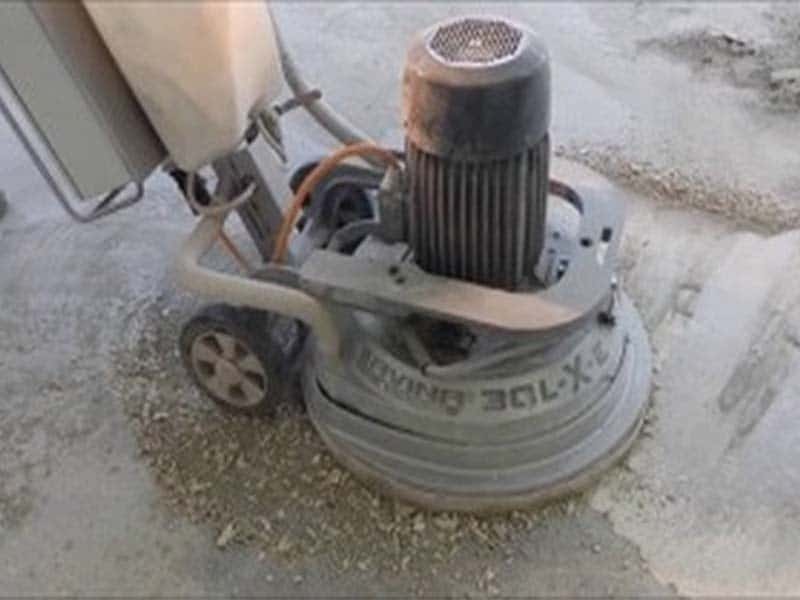
Professional contractors operate multi-head planetary grinders fitted with diamond abrasives capable of levelling high spots, removing coatings, and preparing large areas quickly. These machines distribute grinding pressure evenly, which prevents gouging or uneven surfaces that can occur with smaller tools.

Dust control also becomes a major consideration. Australian workplace safety standards place strict limits on airborne silica exposure, particularly on active construction sites.

Industrial grinding systems connect directly to high-capacity vacuum units that capture dust at the source. This setup protects workers and surrounding trades while keeping work areas clean and compliant with WorkSafe WA safety guidance.

DIY equipment often lacks this level of extraction, which can create health risks and additional clean-up requirements. Surface preparation mistakes may also lead to uneven floors, poor coating adhesion, or costly corrective work later.